
UAE Rolls-Royce Suspension Repair: Ask Before Approval
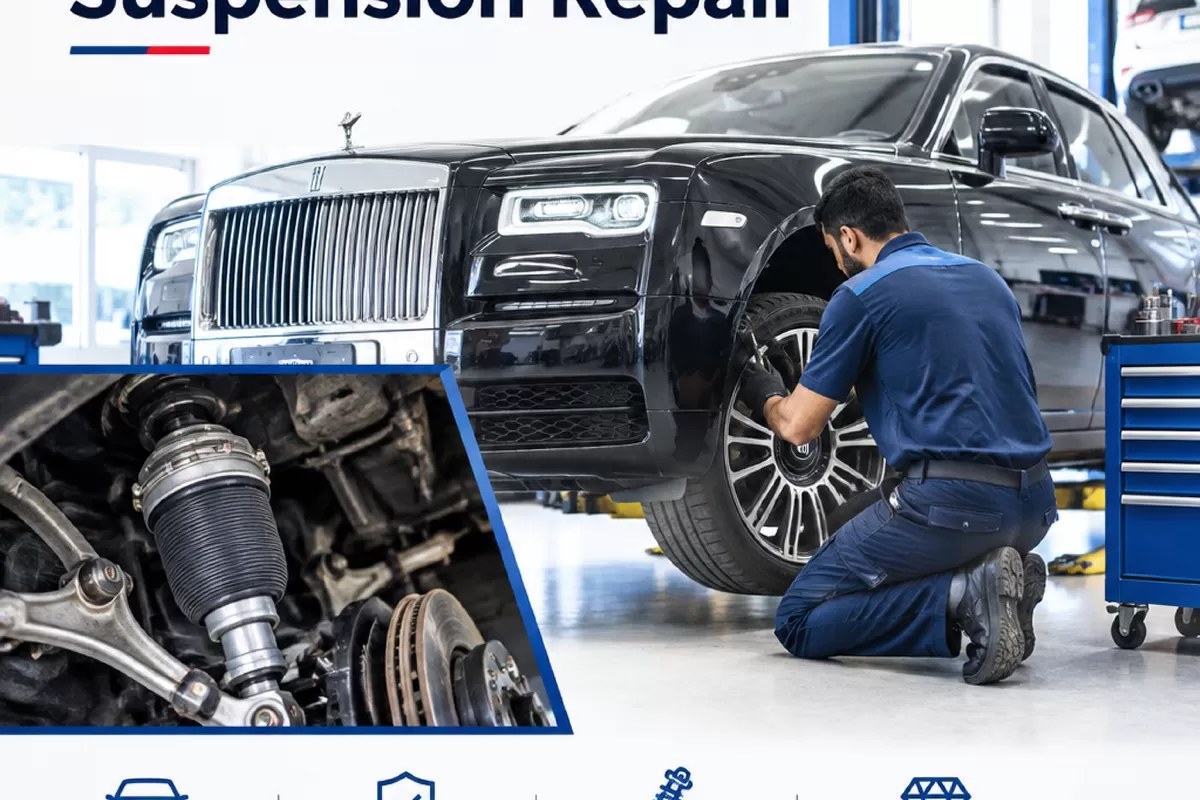 A Rolls-Royce that sits unevenly, feels different over bumps or shows a suspension warning deserves a careful inspection, not a guess. In the United Arab Emirates, where owners may drive between city streets, motorways and varied road surfaces, describing exactly when the change occurs can help a workshop investigate it more efficiently.
If you are arranging rolls royce suspension repair, ask the workshop to explain what it has inspected, what evidence supports its diagnosis and what work it recommends. Heat may be part of the conditions a vehicle experiences in the UAE, but it should not be treated as the confirmed cause of a fault without inspection. The model, suspension specification and condition of the individual car all matter.
Rolls-Royce suspension repair starts with clear symptoms
Before booking an inspection, note what has changed and when you first noticed it. “The ride feels wrong” is a useful starting point, but details can help a technician narrow down what to check. Write down whether the issue happens on a particular road, at low or higher speeds, after the car has been parked, or only when carrying passengers.
Describe what you can observe without trying to diagnose the cause yourself. For example, does one corner appear lower than the others? Does the vehicle feel unusually firm, floaty or unsettled over a familiar stretch of road? Have you heard a new knocking or hissing sound, or seen a dashboard warning? If a warning appears intermittently, make a note of when it happens rather than assuming it has cleared permanently.
Useful information to share with the workshop includes:
- The date or approximate mileage when the change began.
- Whether the car sits level after being parked and whether its height changes.
- Which road conditions bring out the symptom, such as a speed bump or uneven surface.
- Any recent impact, tyre change, repair or other work near the wheels or suspension.
- Whether the behaviour is constant, intermittent or getting worse.
Use the vehicle’s manual for model-specific guidance. If the car is visibly leaning, handling feels unsafe, or a warning advises you to stop, avoid treating it as a routine comfort issue. Ask a qualified workshop how to proceed before continuing to drive. A description from the driver helps guide the inspection, but it cannot confirm which component needs repair.
What a workshop may inspect in the United Arab Emirates
Rolls-Royce suspension systems vary by model and equipment, so the inspection should match the car in front of the technician. Where fitted, an air suspension system may include air springs, an air compressor, pipes, a valve block and ride-height sensors. A technician may inspect these parts and their connections for visible damage, leaks or abnormal operation, then use suitable diagnostic equipment to check for stored faults and system readings.
The inspection may also include mechanical parts that affect how the vehicle moves and tracks, such as dampers, control arms, bushes and joints. Tyres and wheel alignment may be relevant too. An alignment check can help assess whether the wheels are set to the specified angles, but it does not by itself identify the cause of every suspension symptom. The workshop should explain what each check can and cannot establish.
UAE heat is reasonable context to mention when discussing where and how the vehicle is used. However, temperature alone does not prove that a particular air suspension part has deteriorated. Ask the technician to show you the inspection findings and explain how they relate to the symptom. Depending on the result, the fault may need further testing before a repair can be recommended.
For a clearer picture of the factors that can affect repair decisions, Smart Garage provides further technical context. Its Sharjah-based premium technical workshop offers air suspension repairs and wheel alignment. Use any general explanation as background, then ask the workshop to assess your specific Rolls-Royce and confirm its findings.
Ask for the link between the symptom, the test result and the proposed repair. A part should not be replaced simply because it is associated with a familiar suspension problem.
Questions to ask before approving suspension work
Once the inspection is complete, ask the technician to talk you through the diagnosis in plain language. A useful explanation identifies the affected component, the evidence found and whether the workshop has ruled out other likely causes. If the cause is not yet clear, ask what additional checks are needed and whether the vehicle should be driven in the meantime.
Before authorising work, consider asking:
- What did the inspection find? Ask which readings, visible signs or diagnostic results support the recommendation.
- Which parts will be repaired or replaced? Confirm whether the quote covers one component or a related set of parts, and ask why each item is included.
- Are the parts OEM or another specified option? Ask for the part details and have the workshop explain any alternatives before deciding.
- What is included in the written quote? Request an itemised estimate that identifies parts, labour and any further diagnostic work that may be required.
- Will alignment be checked after the repair? Ask whether it is relevant to the work proposed and whether the check is included or quoted separately.
- How will the repair be verified? Ask what checks the technician plans to carry out afterwards, such as reviewing system readings, confirming ride height or road-testing the car when appropriate.
A transparent workshop should be able to separate confirmed findings from possibilities. If a diagnosis depends on further testing, the written quote should make that clear rather than presenting an uncertain cause as settled. Also ask whether you will be contacted before any work outside the agreed scope begins. This gives you a chance to review the new finding and its cost before approving it.
After the repair, ask for a summary of the work completed and the checks performed. If the original symptom returns, note when it happens and contact the workshop with those details. A careful account helps the technician decide whether a follow-up inspection is needed. For Rolls-Royce owners in Sharjah, Dubai and elsewhere in the UAE, the practical next step is straightforward: describe the change precisely, request evidence for the diagnosis, and approve work only when the scope and quote are clear.