
Home Elevators in India: A Smarter Way to Add Comfort, Accessibility and Style
For many Indian homeowners, a lift was once considered something meant only for large commercial buildings, hotels, or luxury apartments. That perception is changing quickly. As modern homes become more spacious, multi-level, and design-focused, home elevators are becoming a practical addition to residential properties across India.
Today, homeowners are looking beyond conventional staircases for easier movement between floors. Whether it is a three-storey independent house, a spacious villa, a duplex, or a multi-level bungalow, a residential lift can make everyday life considerably more convenient.
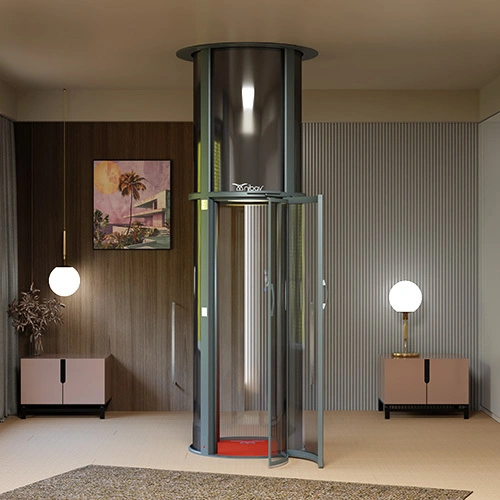
Why Are Home Elevators Becoming Popular in India?
India has a diverse range of residential properties. In cities such as Chennai, Bengaluru, Mumbai, Hyderabad, Delhi, Pune, and Ahmedabad, homeowners are increasingly building vertically because land availability and property prices make large horizontal spaces difficult to achieve.
A home elevator can solve one of the simplest problems associated with multi-storey living: moving between floors without repeatedly using the stairs.
For a young family, it can make carrying groceries, luggage, laundry, and other household items easier. For older family members, avoiding stairs can make daily movement more comfortable. It can also provide greater independence for people who may have difficulty climbing stairs.
Another important factor is home design. Modern homeowners want practical technology without compromising the appearance of their interiors. Contemporary residential elevators are therefore being designed with compact footprints, attractive finishes, glass options, and customisable interiors.
More Than Just a Luxury Feature
One of the biggest misconceptions about residential lifts is that they are purely a luxury feature. While a beautifully designed elevator can certainly add a premium touch to a home, its practical value is equally important.
Imagine living in a three-storey home where the kitchen is on the ground floor, bedrooms are upstairs, and a family lounge is located on another level. Going up and down several times a day can quickly become tiring.
A home elevator makes this movement simpler.
It can be particularly useful for:
- Senior citizens who prefer to avoid frequent stair climbing
- Families with young children
- People with temporary mobility limitations
- Individuals using wheelchairs or mobility aids, depending on the cabin and access design
- Homeowners carrying heavy household items
- Families planning to remain in their homes for many years
This makes an elevator an investment in long-term convenience rather than simply an addition for visual appeal.
Choosing the Right Home Elevator
Not every house has the same requirements. The ideal elevator depends on factors such as available space, the number of floors, expected usage, capacity, installation requirements, and the overall design of the property.
Homeowners should first consider how many people are likely to use the elevator at a time. A compact lift may be suitable for smaller households, while larger families may prefer a model with greater cabin space.
The available installation area is another important consideration. Traditional elevators may require considerable structural preparation, depending on the technology and building configuration. Modern residential lift solutions can offer more flexible installation possibilities, which can be particularly valuable when homeowners are adding a lift to an existing property.
It is also worth considering the elevator’s door configuration, cabin dimensions, safety features, power requirements, maintenance needs, and warranty support before making a final decision.
Nibav Lifts: Residential Mobility Designed for Modern Homes
Nibav Lifts focuses on residential elevator solutions designed specifically for homes. Its range of home lifts is aimed at homeowners who want to improve accessibility while maintaining the character and aesthetics of their property.
One of the notable aspects of Nibav’s approach is its focus on air-driven home lift technology. Pneumatic vacuum elevators use air pressure to move the cabin between floors, offering an alternative to some conventional lift technologies.
The transparent cabin design available in selected Nibav models can also create a contemporary appearance. Instead of making the elevator look like a separate industrial structure, the design can become an integrated part of the home’s architecture.
For homeowners considering a lift for an existing house, factors such as installation space and structural modifications are particularly important. Exploring the technical requirements with a professional team can help determine whether a particular model is appropriate for the property.
Home Elevators Can Support Ageing in Place
Another reason residential lifts are gaining attention is the growing interest in ageing comfortably at home.
People often design their dream homes when they are young, but their mobility requirements can change over time. A staircase that feels easy today may become challenging several years later.
Installing a home elevator can help homeowners prepare their property for the future. Instead of relocating simply because stairs become inconvenient, families may be able to continue enjoying the same home across different stages of life.
This is especially relevant for independent houses and villas with multiple floors. A properly planned elevator can provide convenient access to bedrooms, terraces, living spaces, and other parts of the property.
Installation During Construction or Afterward?
Ideally, elevator requirements should be considered during the planning stage of a new home. Architects and homeowners can then allocate the required space and coordinate the elevator location with the overall floor plan.
However, homeowners who already have a completed property do not necessarily have to abandon the idea of installing a lift.
Residential elevators can sometimes be incorporated into existing homes, depending on the available space, building configuration, and selected technology. A site assessment is essential before deciding on the installation approach.
Planning the elevator early can simplify the process, but retrofit possibilities make residential lifts worth exploring even for existing properties.
Safety Should Always Come First
When choosing a home elevator, design and price should not be the only deciding factors. Safety deserves equal attention.
Homeowners should ask about emergency systems, door mechanisms, backup arrangements, braking or controlled descent systems where applicable, sensors, cabin construction, and maintenance support.
It is also important to purchase from an established manufacturer or authorised provider that can offer proper installation and after-sales assistance.
A professional site assessment is useful because the right elevator should match both the family’s requirements and the physical characteristics of the house.
Is a Home Elevator Worth It?
For many Indian homeowners, the answer depends on how they use their property and what they expect from it in the long term.
If a house has multiple floors and the family regularly moves between them, an elevator can provide meaningful everyday convenience. It can also improve accessibility and make the property more future-ready.
Beyond functionality, a thoughtfully selected residential lift can complement contemporary architecture and potentially enhance the overall appeal of the home.
The important thing is to avoid choosing an elevator purely because it looks attractive or has a low initial price. Capacity, installation requirements, safety, technology, maintenance, service support, and long-term usability should all be considered.
Final Thoughts
The rise of home elevators in India reflects a broader change in the way homeowners think about residential design. A modern home is no longer just about beautiful interiors and impressive architecture; it should also be comfortable, accessible, and convenient for everyone living in it.
From compact urban houses to luxury villas, residential elevators can make multi-level living easier while adding a contemporary touch to the property.
For homeowners exploring this option, Nibav Lifts offers residential elevator solutions that combine modern design with an alternative air-driven lifting technology. The right choice ultimately depends on the home’s structure, family requirements, available space, and long-term plans.
A home elevator is therefore not simply a way to travel between floors. When planned correctly, it can become an everyday part of a more comfortable, accessible, and future-ready home.