
Why Is a Festo Rod Coupler Important in Pneumatics?
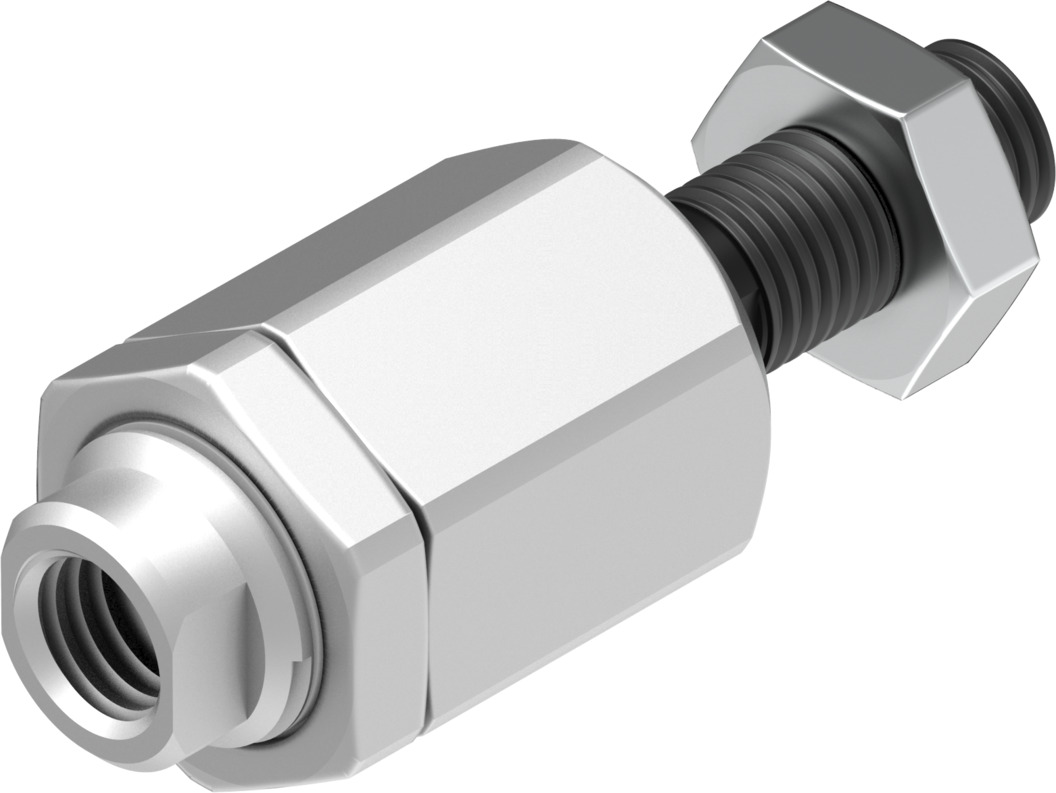
How Does a Rod Coupler Support Reliable Cylinder Movement?
A Festo Rod Coupler creates the mechanical connection between a pneumatic cylinder piston rod and the machine component that must move. Rather than forming a completely rigid joint, a self-aligning coupler can accommodate limited angular and radial variation between the actuator and its load.
This flexibility matters because even small alignment errors can introduce unwanted side forces. By allowing controlled compensation at the connection point, the coupler helps the cylinder transfer force more naturally through the intended linear path.
What Does a Festo Rod Coupler Actually Do?
A self-aligning rod coupler is fitted to the threaded piston rod end and connects it to a moving fixture, slide, stop, clamp, or other machine component.
Festo describes FK and corrosion-resistant CRFK couplers as attachments designed to compensate for radial and angular deviations between the piston rod and the machine part.
This makes the component particularly useful where manufacturing tolerances, mounting variation, or machine movement make perfect alignment difficult to maintain throughout every operating cycle.
Why Can Cylinder Misalignment Cause Problems?
A pneumatic cylinder performs best when force acts along the piston rod centreline. When a connected mechanism sits noticeably to one side, the rod can experience bending and lateral loading.
These unwanted forces may increase friction and place additional stress on rod bearings and seals. Festo specifically advises that misalignment can stress seals and bearings and that flexible coupling between the drive and load can help reduce wear and leakage.
Machines using Pneumatic Clamping Cylinders should therefore consider the complete mechanical load path when fixtures or workpieces could create off-axis forces.
How Much Misalignment Can a Festo Rod Coupler Handle?
The allowable compensation depends on the exact Festo model and size. It should never be assumed that every FK or CRFK coupler permits the same movement.
Festo’s FK range includes different thread sizes and load ratings, with model-dependent radial compensation. CRFK stainless-steel versions documented by Festo provide radial compensation of ±1 mm across listed sizes and are designed for demanding corrosive environments.
The coupler is intended to manage limited installation deviation, not compensate for seriously incorrect machine geometry.
What Is the Difference Between Festo FK and CRFK Rod Couplers?
FK is Festo’s self-aligning rod coupler family for general industrial applications. CRFK is the corrosion and acid-resistant version designed for environments where standard materials may not provide sufficient resistance.
Festo specifies high-alloy stainless steel for major CRFK components and identifies these versions for applications involving particularly high corrosion stress.
This may make CRFK more appropriate for selected food-processing, chemical, outdoor, or washdown-related environments, subject to the complete machine requirements.
Where Is a Festo Rod Coupler Commonly Used?
Rod couplers can support many automated linear-motion applications where pneumatic cylinders drive external mechanisms.
Typical examples include:
- Assembly fixtures
- Packaging equipment
- Conveyor stops
- Sorting mechanisms
- Automated gates
- Product transfer equipment
- Positioning stations
- Testing machinery
- Clamping equipment
- Material handling systems
A machine incorporating Slide Unit Actuators may use a different guidance arrangement, so engineers should determine whether the actuator itself controls lateral loads or whether additional alignment compensation is required.
How Do You Choose the Correct Festo Rod Coupler?
Start with the piston rod thread because the coupler must mechanically match the actuator. Then compare the expected tensile and compressive load, allowable angular movement, radial compensation, environment, and installation space.
Important selection factors include:
- Festo cylinder series
- Piston rod thread size
- Maximum working load
- Required radial compensation
- Required angular compensation
- Available installation length
- Corrosion conditions
- Machine mounting geometry
- Frequency of operation
- Expected mechanical shock
Festo documents FK variants across multiple metric thread sizes, while compatible couplers are also listed as accessories for cylinder families such as DSNU.
Does Cylinder Mounting Affect Rod Coupler Performance?
Yes. A rod coupler cannot correct a badly mounted actuator. The cylinder body should be secured correctly and positioned so its natural movement follows the intended machine travel.
Incorrect mounting can still create excessive side loads even when a self-aligning coupler is installed. Mechanical supports, brackets, and actuator mounting points should therefore be checked before commissioning.
When sensors also form part of the assembly, Pneumatic Cylinder & Actuator Switch & Sensor Mounting Equipment can help position compatible detection devices securely around the actuator.
Can Air Pressure Affect the Load on a Rod Coupler?
Yes. Increasing pneumatic pressure generally increases cylinder force, which also increases the mechanical force transferred through the piston rod and coupler.
The selected coupling must therefore be suitable for the maximum expected tensile and compressive forces, not only normal operating conditions.
Suitable Pneumatic Pressure Regulators help maintain controlled downstream pressure so actuator force remains appropriate for the application.
Oversizing pressure unnecessarily can increase energy consumption and mechanical stress throughout the actuator system.
How Does the Control Valve Influence Cylinder Movement?
The directional valve controls when compressed air enters and leaves the actuator chambers. Valve flow capacity and switching behaviour influence acceleration, speed, and cycle response.
Compatible Pneumatic Solenoid/Pilot-Operated Control Valves can automate cylinder extension and retraction when their flow, port configuration, pressure range, and electrical requirements match the system.
Smooth pneumatic control can also reduce sudden mechanical loading at the coupling and driven mechanism.
Does Compressed Air Quality Matter to the Complete Assembly?
Although the rod coupler itself is mechanical, cylinder reliability also depends on the condition of the compressed-air supply.
Contamination and unstable pressure can affect actuator seals, valves, and moving components. Suitable Filter Regulators combine filtration and pressure regulation to help provide cleaner air at a controlled pressure to downstream equipment.
A well-designed pneumatic circuit therefore protects both the actuator and the mechanical components connected to it.
How Should a Festo Rod Coupler Be Installed?
First, isolate the pneumatic system and release stored pressure. Align the cylinder and driven component as accurately as practical before fitting the coupling.
Install the coupler using the thread and fastening method specified for the exact model. Avoid using the rod coupler to pull a severely offset load into position.
After installation, operate the mechanism slowly through the complete stroke. Look for:
- Piston rod bending
- Binding
- Irregular movement
- Unexpected vibration
- Loose fasteners
- Excessive coupling movement
- Contact with surrounding machine parts
Any significant problem should be corrected before full-speed production begins.
Can a Rod Coupler Reduce Pneumatic Cylinder Maintenance?
Correct alignment can help reduce unnecessary mechanical wear, so a properly selected coupler may contribute to longer and more consistent actuator operation.
However, the coupling should still be inspected periodically. Look for looseness, thread damage, corrosion, deformation, excessive play, or signs that the connected mechanism is forcing the piston rod sideways.
Repeated coupler wear can indicate that the machine has an underlying alignment or guidance problem.
Why Choose the Correct Festo Rod Coupler?
A correctly selected Festo Rod Coupler helps connect the piston rod to a moving machine component while allowing limited angular and radial alignment compensation. This can reduce unnecessary side loading and support smoother linear force transfer.
Selection should always consider thread size, cylinder force, permitted misalignment, corrosion conditions, mounting geometry, and operating environment. When combined with correct actuator mounting and controlled pneumatic operation, the right rod coupler can support dependable motion and longer-term machine reliability.